Step Cutting Concrete: Plan Passes Within Your Saw’s Limits
Step cutting means reaching the required depth through successive passes along the same line. It can help control cutting load and establish alignment, but it does not increase a saw's maximum cutting depth or eliminate kickback risk.
The correct pass depth depends on the saw, blade, material and manufacturer's procedure. There is no universal two-pass or three-pass rule for a deep slab.
Establish the cut requirements first
Identify the slab thickness and purpose of the cut. A contraction joint needs its specified depth; a removal cut may need to pass through the slab. Locate embedded services and reinforcement, and obtain the necessary clearance before cutting. Post-tensioned or structural concrete requires specialist planning.
Plan how the slab and offcut will be supported as the cut progresses. A moving section can trap a blade even in a shallow pass.
Check usable cutting capacity
Read the saw manual for maximum cutting depth with the approved blade. Blade radius is not usable cutting depth: the mounting assembly and guard limit how far the blade can enter the material.
If the required depth exceeds capacity, select suitable equipment or an engineered alternative. Never fit an oversized blade or remove the guard to reach deeper.

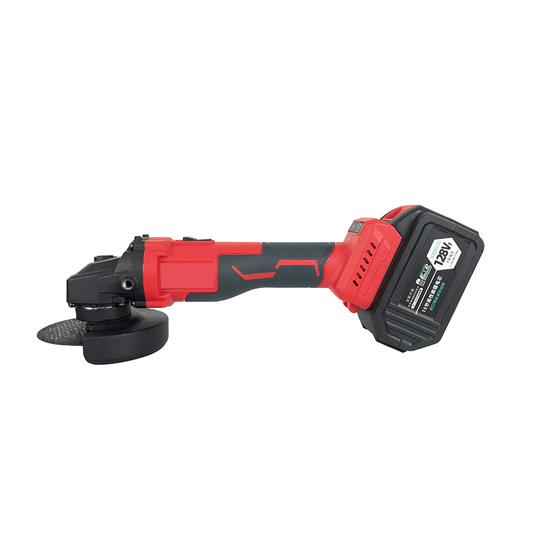
RedhawkPro gas cut-off saw. Confirm specifications and approved applications before use.
For the RedhawkPro gas cut-off saw, verify the actual depth rating, arbor configuration and blade-shaft speed in the documentation. A 14-inch description alone does not establish compatibility with every 14-inch blade.
Plan and execute the passes
- Mark the line and establish stable footing, support and access along the cut.
- Inspect and mount a material-rated blade using the approved flanges and tightening procedure.
- Establish continuous water delivery when required by the blade, saw and dust-control method.
- Make the initial guide pass and subsequent depth increments as instructed by the saw manufacturer.
- Keep the blade aligned with the existing kerf. Do not twist the saw to correct a line while the blade is engaged.
- Monitor support and water flow throughout the cut; stop if conditions change.
Start and re-enter only by the manufacturer's procedure, with the blade free to rotate. Do not restart a trapped blade in the kerf.
Respond to changing conditions
| Symptom | Response |
|---|---|
| Repeated bogging | Stop and check feed, blade match and saw condition |
| Vibration or a wandering line | Stop and inspect mounting, blade and support |
| Loss of water or rising dust | Stop cutting and restore the control |
| Pinching or material movement | Stop; isolate the machine before resolving the cause |
A shallow cut can still produce a serious reaction. Husqvarna's kickback guidance distinguishes forward pulling from rotational kickback according to where pinching occurs. Pass staging does not make either harmless.
Choose the equipment for the whole job
A handheld cutter can suit short accessible cuts. Long floor cuts or greater depths may call for a walk-behind saw or another system. Compare required depth, access, support and production needs before choosing the machine.
Review the RedhawkPro concrete blade only after establishing those requirements. Matched equipment and controlled passes are useful; promised blade-life gains without job-specific evidence are not a planning basis.