Flush Cutting Tile Flanges and Floor Drains: Safe Level Cutting with Low-Profile Flange Wheels
If you need to flush cut a floor drain tile installation, PVC stub, or protruding flange, the right setup is an angle grinder with a diamond wheel that can work close to the finished surface without a bulky mounting system blocking the wheel. The trick is not brute force. It is keeping the wheel stable, controlling heat, and approaching the cut without levering the disc sideways into porcelain.
Anybody who has remodeled enough bathrooms has seen the ugly version. The tile is finished, the drain or pipe is sitting proud, and somebody grabs whatever diamond blade happens to be in the truck. The grinder body gets close, the nut or flange bottoms out, and the blade still cannot reach the cut line. So the operator tilts the grinder harder, starts side-loading a wheel that was never meant for it, and suddenly a ten-minute correction turns into chipped porcelain, a gouged floor, or a drain that still sits too high.
That is not a cutting problem. It is a tooling and access problem.
Why Flush Cut Floor Drain Tile Work Goes Wrong
A normal diamond cutting blade is good at what it was built to do: cutting primarily with its rim. That does not automatically make it a good flush cut diamond wheel for an angle grinder.
The problem starts at the center of the setup. On a conventional grinder installation, the backing flange, locking nut, blade geometry, and grinder head determine how close the working edge can physically get to the floor. If that stack-up sticks out farther than the cut line, you are done before the motor even starts. Tilting the tool does not solve the geometry. It only changes the way the wheel enters the material.
That matters when cutting pipe flush with a tile floor because porcelain is not forgiving. Approach it with a wheel that chatters or a grinder being forced sideways and the edge can chip before you have time to correct your hand.
Heat makes the situation worse. Diamond abrasives cut by exposing hard abrasive particles to the work. When debris stays packed around the contact zone and the operator responds to slowing performance by pushing harder, heat climbs. More pressure also increases motor load and makes precise control harder.
Then there is runout. A wheel or mounting system that is not sitting true does not magically straighten itself at speed. The edge moves laterally, the cut gets wider than intended, and that tiny correction beside an installed drain becomes a much bigger repair.
That is why experienced installers spend money on the interface between the grinder and the material. Saving twenty bucks on the wrong wheel means nothing if you spend another hour repairing a finished floor.
For other grinder setups, start with the RedhawkPro angle grinder accessories collection and match the accessory to the actual operation instead of forcing one wheel to do a job its mounting geometry cannot reach.
Flush Cut Floor Drain Tile Work Needs Access, Not More Force
The RedhawkPro Turbo-Wave Electroplated Diamond Wheel attacks this problem differently. It is a 2-in-1 cutting and grinding wheel with diamond working surfaces on both sides, a reinforced 65Mn steel core, high-exposure electroplated diamond, and a removable flange system. Available configurations include common grinder interfaces such as 5/8"-11 and M14, depending on the selected variant.
That combination matters around drains, pipe penetrations, and tight finished surfaces because you are not dealing with a disposable cutoff wheel that becomes useless the moment you need to transition from cutting to edge correction.
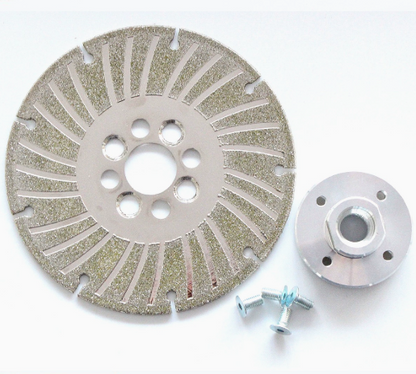
Figure 1: RedhawkPro Turbo-Wave wheel with its removable flange system. The dual-sided electroplated diamond working surface allows cutting and controlled edge grinding from the same wheel.
The Turbo-Wave pattern also gives debris somewhere to go instead of leaving the entire face as one uninterrupted contact patch. That becomes important during a plunge cut in porcelain flooring or when trimming material in a confined area where you cannot make one long, free-running cut.
But do not confuse better wheel geometry with permission to get careless.
Before touching the drain, confirm that the wheel size, thread or arbor configuration, grinder, guard arrangement, and manufacturer instructions are compatible. Never improvise adapters or defeat a guard simply because the cut is awkward. If the required access cannot be achieved with a properly configured tool, change the method rather than creating an unsafe grinder setup.
Bring the wheel into the work progressively. Do not slam the face into the pipe or flange and then lean your body weight onto the grinder. Let the exposed diamond do the work. For trimming a protruding section, establish the cut under control and work around the circumference rather than burying the wheel and twisting it through the material.
RPM is equally simple: stay within the rated limits of the wheel and grinder. There is no magic universal "sweet spot" worth inventing. Variable-speed grinders should be operated according to the accessory and grinder manufacturer's requirements.
Pressure follows the same rule. If the motor is audibly laboring, your hands are fighting the grinder, or the wheel is no longer clearing material normally, backing off and diagnosing the problem beats pushing harder.
For installers who routinely work around finished tile, the dedicated 4-1/2-inch Turbo-Wave diamond wheel is another option worth matching against the grinder and available clearance.
Jobsite Decision Table: Standard Wheel vs. Engineered Flush-Cutting Setup
| Dimension | Old/Standard Method | RedhawkPro Engineered Approach |
|---|---|---|
| Cut Speed | Operator often fights poor access and compensates with pressure | Open Turbo-Wave geometry and exposed diamond support efficient material removal |
| Edge Quality | Tilted entry and wheel chatter can increase chipping risk | Stable wheel geometry gives the operator better control near finished surfaces |
| Tool Life | Excessive pressure and heat accelerate useful-surface loss | Dual-sided electroplated working surfaces allow the wheel to be reversed when appropriate |
| Safety/Risk | Improvised angles, mismatched hardware, and side-loading increase risk | Correctly matched grinder interface and controlled cutting reduce the need for improvised setups |
| Cost-Per-Cut | Cheap wheel price can be erased by rework, wheel changes, and labor | One cutting-and-grinding wheel can reduce accessory changes and secondary edge-work time |
Three Golden Rules for Flush Cut Floor Drain Tile Jobs
First, check the mounting system before blaming the diamond. Disconnect the grinder from power, inspect the mating surfaces, and make sure debris is not trapped between the wheel and mounting hardware. A wheel mounted off-center can produce runout, and runout becomes chatter at the edge. Around finished porcelain, that is exactly where expensive mistakes begin.
Second, watch motor load instead of proving how strong you are. A slowing grinder is information. Excessive pressure creates heat, reduces control, and loads both the wheel and motor. If cutting performance falls off, stop and inspect the wheel, material, mounting, and debris conditions instead of simply leaning harder.
Third, treat cutting and grinding as different motions even when one wheel can perform both jobs. A 2-in-1 wheel does not erase basic grinder technique. Establish the cut cleanly, then use the appropriate working surface for controlled correction or shaping. Do not twist a buried wheel sideways to hurry a toilet drain flange tile cutting job.
And if you are unsure whether your grinder, thread, wheel size, or application is compatible, contact RedhawkPro Tools before improvising hardware on a high-speed grinder.
Stop Paying Twice for Cheap Tooling
A flush cut floor drain tile job is precision work performed inches from material you have already been paid to finish correctly. Do not gamble that floor on a bargain wheel and a bad mounting setup. Use the RedhawkPro Turbo-Wave 2-in-1 Diamond Cutting & Grinding Wheel, match it correctly to the grinder, and let the tooling—not brute force—do the work. Cheap tooling gets expensive fast when you pay for the mistake twice.