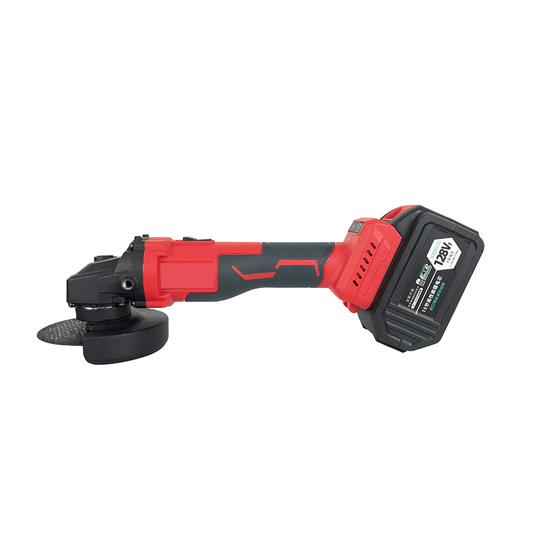
Detail Stone Relief and Sculpting with 4-Inch Compact Turbo-Wave Discs
For detailed relief carving, a handheld stone carving grinder works best when the wheel gives you both controlled edge cutting and side-face grinding without forcing constant tool changes. A compact 4-inch diamond wheel gives you better access around recesses, borders, lettering, and curved relief than a larger wheel—but control still comes from light pressure, deliberate passes, and a wheel designed to grind on its face as well as cut on its edge.
That last part matters. I’ve seen good stonework ruined by guys trying to sculpt with whatever diamond blade happened to be on the grinder. A thin cutting blade is made to cut. Start leaning on its face trying to carve a shadow line or soften a raised feature and you’re asking the wrong tool to do the wrong job. The result can be chatter, an ugly gouge, overheated tooling, or a piece of stone you now have to explain to the customer.
Relief work isn’t about attacking stone harder. It’s about removing exactly the stone you meant to remove—and leaving everything else alone.
Why Ordinary Cutting Wheels Fight Detail Work
There’s a big difference between slicing a straight line through tile and relief carving stone with angle grinder control. In relief work, the wheel rarely spends the whole job moving straight ahead. You’re establishing outlines, lowering backgrounds, opening grooves, blending transitions, shaping convex forms, cleaning inside corners, and sometimes switching between edge contact and face contact every few seconds.
That exposes the weakness of a single-purpose cutting blade.
A conventional diamond blade concentrates its working geometry around the perimeter. That makes sense for cutting. It becomes a problem when an operator starts using side pressure to grind or sculpt with a wheel that was never designed for that loading. Instead of controlled material removal, you can get vibration, wandering, and poor feedback through the grinder.
Then comes the second bad habit: forcing the wheel.
When a cheap or poorly matched abrasive stops removing stone the way the operator expects, most inexperienced hands push harder. More pressure means more friction and more heat. It also makes the grinder harder to guide across small features. On a broad demolition cut, being off a little may not matter. On a carved border or shallow relief, being off a little can erase an edge you spent twenty minutes establishing.
Wheel diameter matters, too. A larger wheel has its place, but detail work benefits from maneuverability. A 4 inch diamond carving wheel keeps the working area compact enough to approach tighter geometry and makes it easier to see what the wheel is doing around the contact point.
That doesn’t turn an angle grinder into a dental handpiece. It does make the right grinder-and-wheel combination considerably more useful for controlled shaping.
Handheld Stone Carving Grinder Setup: Why the 4-Inch Turbo-Wave Works
The RedhawkPro 4-Inch Turbo-Wave 2-in-1 Diamond Cutting & Grinding Wheel is built around a simple idea: a stone fabricator shouldn’t have to choose between perimeter cutting and controlled face grinding every time the geometry changes.
The wheel uses diamond abrasive on both working faces and is designed for straight cutting, edge grinding, beveling, shaping, and surface work. Its Turbo-Wave channels help move grinding debris away from the working zone and manage heat buildup, while the reinforced 65Mn spring-steel core provides the rigidity needed for controlled grinder work.
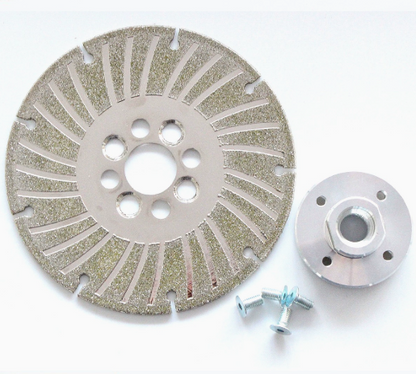
Figure 1: The compact RedhawkPro 4-Inch Turbo-Wave wheel combines a diamond-coated perimeter and working faces, allowing the operator to move between cutting, shaping, beveling, and controlled grinding without treating a cutting-only blade like a grinding disc.
For sculpting stone relief techniques, that 2-in-1 geometry changes the workflow. Use the perimeter when you need to establish a controlled groove, outline a relief feature, or remove material along an edge. Transition to the diamond-coated face when you need to lower an adjacent area, blend a transition, shape a bevel, or refine the surface. Instead of stopping every time the operation changes, the same wheel can handle both types of contact for which it was designed.
The compact 4-inch diameter is especially useful where visibility and access matter. Think fireplace details, decorative stone borders, monument work, tile fabrication, curved profiles, recessed areas, and smaller architectural features. For broader cuts and other diamond-wheel applications, the RedhawkPro cutting wheel collection covers additional wheel configurations.
Technique is still everything. Don’t bury the wheel into the stone and expect it to carve for you. Establish your geometry with shallow passes. When face grinding, keep the wheel moving rather than parking the abrasive on one spot. Let exposed diamond remove material instead of trying to accelerate the job with body weight. Excessive pressure increases motor load and heat while making a small grinder more difficult to steer.
RPM deserves the same discipline. We do not publish a tested “best carving RPM” for every combination of limestone, bluestone, granite, marble, porcelain, and other materials, so there is no legitimate one-number recommendation to give you here. Follow the grinder and wheel ratings, never exceed the accessory’s rated operating speed, and use a compatible grinder according to its manufacturer’s instructions. If a particular stone requires application-specific speed guidance that has not been tested, don’t invent a setting.
If you need more reach or working area than the compact wheel provides, the RedhawkPro 4-1/2-Inch Turbo-Wave Diamond Wheel gives you the same general cut-and-grind concept in the next size up.
Old Cutting-Blade Method vs. RedhawkPro Engineered Approach
| Dimension | Old/Standard Method | RedhawkPro Engineered Approach |
|---|---|---|
| Cut Speed | Cutting blade works well on straight cuts but may require tool changes when the job moves into shaping | 2-in-1 working geometry allows cutting followed by grinding, beveling, or shaping with the same wheel |
| Edge Quality | Forcing a cutting-only blade into side grinding can create poor control and uneven transitions | Diamond-coated working faces allow deliberate material removal during edge and relief shaping |
| Tool Life | Using an abrasive outside its intended loading can cause unnecessary wear and heat | Dual-sided electroplated diamond surfaces are designed to provide usable abrasive area on both faces |
| Safety/Risk | Side-loading a cutting-only blade or forcing a dull tool introduces avoidable risk | Purpose-designed cutting and grinding capability reduces the temptation to misuse a cutting-only wheel |
| Cost-Per-Cut | Cheap wheels become expensive when disc changes, rework, and labor start stacking up | One correctly matched wheel can handle multiple operations, reducing unnecessary changeovers during detailed fabrication |
Three Golden Rules for Detail Stone Grinding
First, rough the shape—don’t chase the finished surface in one pass. A detail stone grinding disc is still removing hard material at grinder speed. Establish depth gradually, then blend the high spots. Trying to reach final geometry immediately is how a small correction becomes an irreversible gouge.
Second, watch the motor instead of fighting it. If the grinder bogs noticeably when you push into the work, backing off is usually smarter than leaning harder. Heavy pressure increases heat and reduces your ability to guide the wheel through fine contours. Diamond needs contact, not brute force.
Third, eliminate wobble before you touch expensive material. Check that the wheel and removable flange are correctly installed and seated, and verify that the thread configuration matches the grinder. The 4-inch Turbo-Wave is offered in 5/8"-11, M14, and M10 configurations. If the wheel isn’t running true, stop. Chatter at the spindle becomes a mistake at the stone.
That matters even more when the work is decorative. Nobody notices how quickly you removed the background from a relief. Everybody notices the groove you accidentally cut through the finished line.
Put the Right Wheel on the Grinder
Stone sculpting rewards control, not aggression. If the job moves repeatedly between outlining, grinding, shaping, and beveling, use a wheel engineered to handle those operations instead of abusing a cheap cutting blade and paying for the mistake in labor. The RedhawkPro 4-Inch Turbo-Wave Diamond Cutting & Grinding Wheel puts that capability into a compact format built for tight, detailed work.